
Ultra-Precision Gear
Ultra-Precision Gear Manufacturing
High-Accuracy Metal Gear Solutions for Advanced Motion & Power Transmission
Ming-Li provides ultra-precision metal gear manufacturing solutions for demanding applications where gear accuracy, dimensional consistency, smooth transmission, low noise, and long-term process stability are critical.
With extensive experience in precision metal components and gear-related products, Ming-Li combines advanced gear manufacturing equipment, customized cutting tools, precision fixture design, optimized machining parameters, comprehensive inspection, and stable production control.
Our capabilities support applications across automotive, electric vehicles, robotics, industrial automation, electronics, marine systems, power transmission, and precision motion systems, from engineering evaluation and prototype development through mass production.
Core Gear Manufacturing Capabilities
| Key Capability | Ming-Li Capability |
|---|---|
| Gear Manufacturing Process | Precision Gear Hobbing |
| Gear Hobbing Equipment | Gleason-Pfauter |
| Module Range | 0.1 – 3.0 |
| Achievable Gear Quality | Up to DIN 4 / ISO 4 / AGMA 2015 A4 |
| Gear Inspection Equipment | Klingelnberg Gear Measuring Equipment |
| Gear Inspection Parameters | Profile, Lead, Pitch, Runout |
| Cutting Tool Capability | Standard & Customized Hobs |
| Fixture Capability | Customized Precision Fixture Design |
| Engineering Support | Manufacturing Feasibility & Process Optimization |
| Production Capability | Prototype to Mass Production |
| Key Engineering Focus | Accuracy, Stability, Repeatability & NVH Performance |
Experience in Complex Precision Gear Manufacturing
Ming-Li has extensive experience in manufacturing complex precision metal gears and gear-related components, with strong capabilities in tooth geometry, dimensional accuracy, machining stability, and production consistency.
Precision gear manufacturing involves much more than achieving the correct outside diameter or basic tooth geometry. Critical characteristics including tooth profile, lead, pitch, runout, concentricity, dimensional accuracy, and tooth-to-tooth consistency can directly affect the performance of the final transmission system.
Our engineering team therefore evaluates each gear according to its material, geometry, module, required accuracy, production volume, operating conditions, and functional requirements before determining the appropriate manufacturing strategy.
This engineering-driven approach allows Ming-Li to support a wide range of applications, from compact precision motion components to demanding gears used in electric vehicle reduction systems, robotics, industrial machinery, and high-performance transmission systems.
Gleason-Pfauter Precision Gear Hobbing
For precision gear manufacturing, Ming-Li utilizes Gleason-Pfauter gear hobbing machines.
Our gear hobbing capability covers:
Module 0.1 – 3.0
This range enables Ming-Li to support a broad variety of small and medium-sized precision gears, including fine-module gears, compact transmission gears, planetary gears, industrial transmission components, and other precision motion applications.
For gears with special specifications, Ming-Li can evaluate and develop customized cutting tools and hobs according to the specific gear parameters.
Rather than applying one standard machining method to every gear, we select the appropriate cutting tool, fixture concept, machining parameters, and process sequence according to the actual requirements of each component.
Gear Types & Geometries We Support
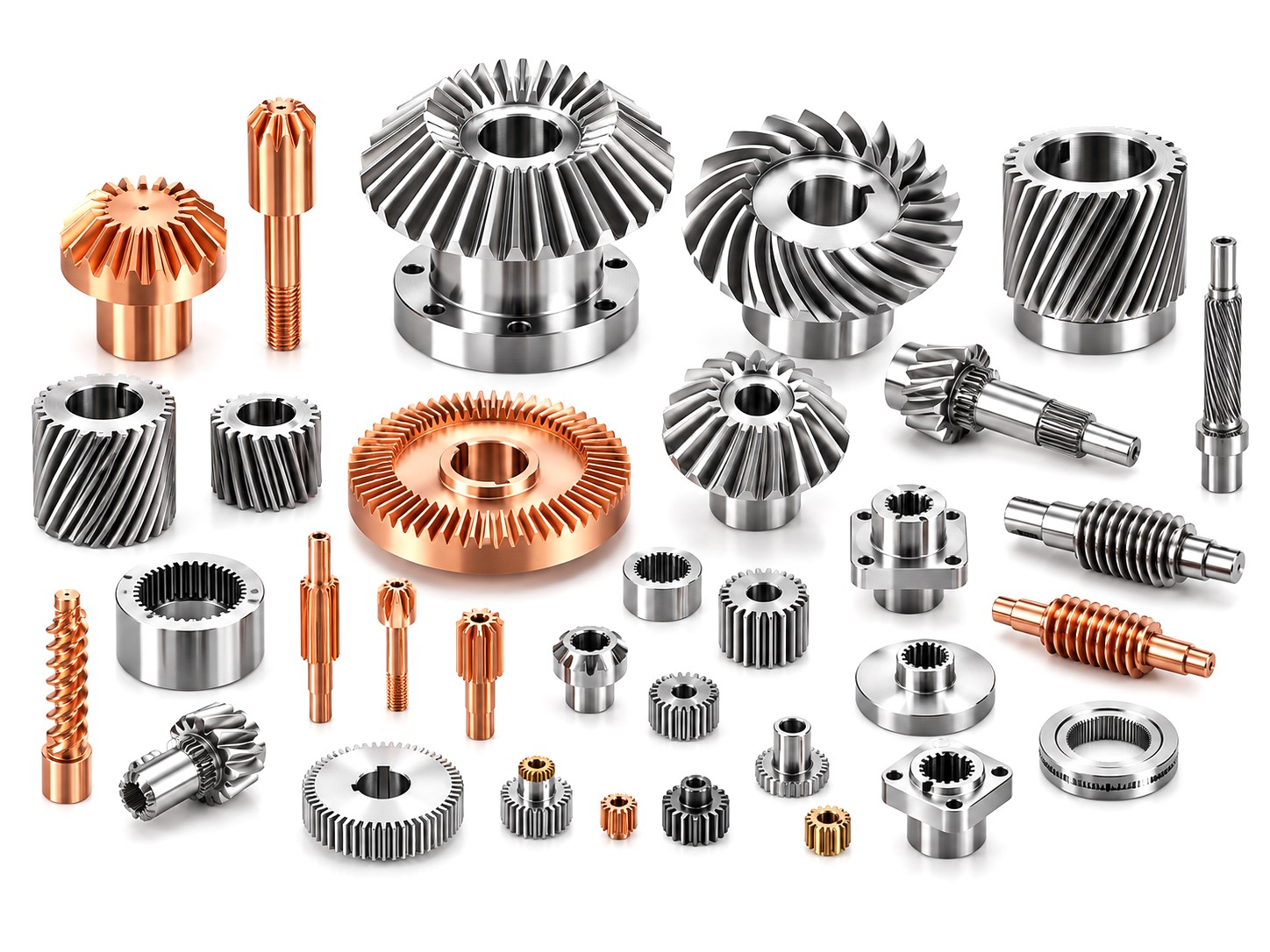
Ming-Li supports a broad range of precision gear geometries for advanced transmission and motion-control applications. The appropriate manufacturing process is selected according to gear geometry, material, accuracy requirement, module, production volume, and application conditions.
| Gear Type | Typical Applications / Manufacturing Focus |
|---|---|
| Spur Gears | General precision transmission, automation, industrial equipment, and compact drive systems |
| Helical Gears | Smooth-running and low-noise transmission systems requiring controlled lead and tooth geometry |
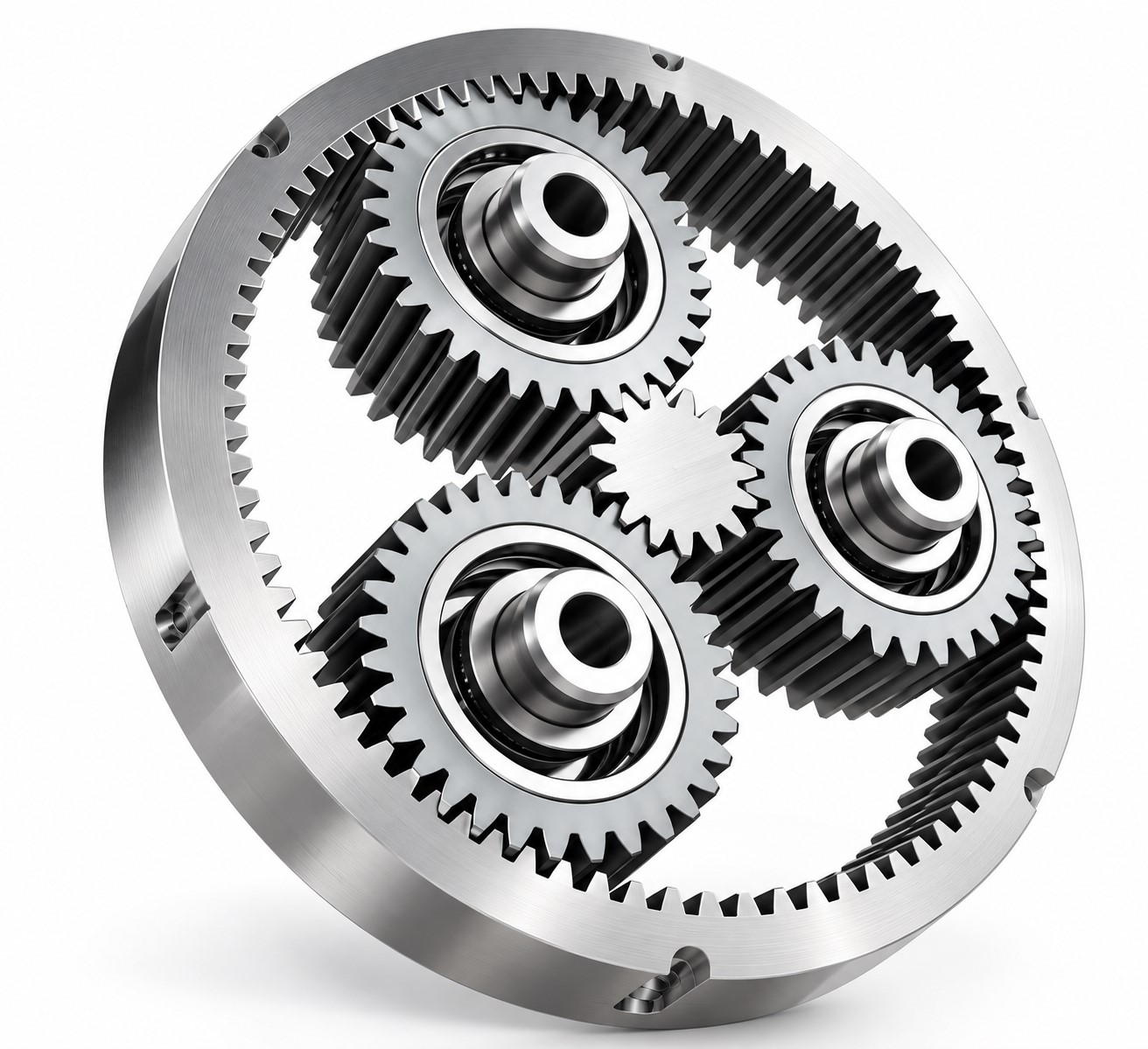
| Planetary Gear Components | EV reduction gearboxes, robotics, compact reducers, and high-efficiency power transmission systems |
| Sun Gears | Central drive components used in planetary transmission systems |
| Planet Gears | Compact planetary reduction systems requiring precision, repeatability, and stable meshing |
| Internal Ring Gears | Planetary reduction and compact transmission applications; manufacturing route subject to geometry and process evaluation |
| Fine-Module Gears | Camera, electronics, robotics, precision motion, and compact mechanisms |
| Custom Precision Gears | Customer-specific tooth geometry, materials, tolerances, and transmission requirements |
For non-standard gear geometries or special tooth specifications, our engineering team reviews the drawing and gear table to determine the appropriate cutting tool, fixture concept, machining sequence, and inspection strategy. Customized hobs or other dedicated tooling may be required depending on the design.
Precision Gear Quality
Ming-Li's achievable gear quality reaches:
DIN 4 | ISO 4 | AGMA 2015 A4
Achieving this level of gear quality requires coordination between machine capability, cutting tools, workholding, machining parameters, thermal stability, inspection, and process control.
Our manufacturing philosophy therefore focuses not only on producing a single conforming part, but also on establishing a repeatable and stable manufacturing process capable of maintaining precision during production.
Gear Inspection & Quality Control
Ming-Li utilizes Klingelnberg gear measuring equipment to verify critical gear characteristics and support engineering analysis, process optimization, first-article validation, and mass-production quality control.
| Inspection Item | Purpose |
|---|---|
| Tooth Profile | Verification of involute and tooth profile accuracy |
| Lead | Verification of tooth direction and helix accuracy |
| Pitch | Evaluation of tooth-to-tooth spacing consistency |
| Runout | Evaluation of rotational accuracy and concentricity |
| Dimensional Inspection | Verification of critical drawing dimensions |
| First Article Inspection | Confirmation of initial production capability |
| Process Monitoring | Maintaining consistency throughout mass production |
The combination of precision gear manufacturing and dedicated gear measurement enables Ming-Li to identify process variation early and optimize machining conditions before entering stable production.
Precision Fixture Design & Workholding
Machine accuracy alone does not guarantee gear accuracy.
Fixture rigidity, workholding stability, vibration, cutting forces, deformation, machining sequence, and thermal effects can all directly influence the final gear geometry.
Ming-Li has extensive experience in precision fixture design and machining parameter optimization.
Depending on the material, size, geometry, tolerance, and production requirements of each gear, our engineering team develops appropriate fixturing and machining strategies to provide rigid and stable workholding while minimizing:
- Vibration
- Part movement
- Machining deformation
- Runout variation
- Dimensional variation
- Process instability
This capability is particularly important for small precision gears and complex components where even minor movement during machining can affect final tooth accuracy.
Customized Gear Cutting Tools
Not every precision gear can be manufactured with standard cutting tools.
For gears with special tooth geometry or specific engineering requirements, Ming-Li can develop and customize the appropriate gear hobs and cutting tools according to the individual gear parameters.
During the engineering review, we evaluate factors including:
| Engineering Parameter | Evaluation |
|---|---|
| Module | Gear size and cutting tool selection |
| Number of Teeth | Tool geometry and machining strategy |
| Pressure Angle | Tooth geometry compatibility |
| Helix Angle | Cutting method and tool configuration |
| Material | Cutting condition and tool selection |
| Gear Accuracy | Required process capability |
| Special Tooth Geometry | Customized hob evaluation |
| Production Volume | Tool life and process efficiency |
The objective is to establish the most appropriate manufacturing process for the specific gear rather than forcing the design into a standard production method.
Gear Manufacturing Process
A typical Ming-Li precision gear manufacturing project follows a structured engineering and production process:
1. Drawing & Gear Specification Review
Review 2D drawings, 3D CAD data, gear tables, materials, tolerances, accuracy requirements, and annual production volumes.
↓
2. Manufacturing Feasibility Review
Evaluate gear geometry, workholding, cutting method, tooling requirements, inspection method, and potential manufacturing risks.
↓
3. Cutting Tool / Hob Selection
Select standard cutting tools or develop customized hobs based on the required gear parameters.
↓
4. Precision Fixture Design
Develop appropriate fixtures to ensure rigid and stable workholding.
↓
5. Gear Hobbing & Precision Machining
Manufacture the component using optimized machining parameters and controlled processes.
↓
6. Klingelnberg Gear Inspection
Measure profile, lead, pitch, runout, and other critical gear characteristics.
↓
7. Process Optimization
Adjust machining parameters, fixturing, and cutting conditions based on measurement results.
↓
8. First Article Validation
Complete dimensional and gear inspection prior to production approval.
↓
9. Stable Mass Production
Maintain controlled manufacturing conditions and continuous inspection to ensure repeatable quality.
Engineering for NVH Performance
Noise, Vibration & Harshness
The rapid growth of electric vehicles and advanced motion systems has significantly increased customer expectations regarding NVH — Noise, Vibration and Harshness.
In EV reduction gearboxes and other high-speed transmission systems, relatively small variations in gear characteristics can influence:
- Gear meshing behavior
- Transmission smoothness
- Noise
- Vibration
- Efficiency
- Durability
Ming-Li therefore focuses not only on dimensional compliance, but also on manufacturing consistency and process stability.
Important characteristics include:
| NVH-Related Factor | Manufacturing Focus |
|---|---|
| Tooth Profile | Accurate and consistent tooth geometry |
| Lead | Stable contact pattern |
| Pitch | Consistent tooth spacing |
| Runout | Controlled rotational accuracy |
| Fixture Stability | Reduction of machining variation |
| Cutting Parameters | Consistent cutting conditions |
| Process Repeatability | Stable results across production batches |
Our objective is to establish a controlled manufacturing process capable of consistently producing gears that meet demanding performance requirements.
Precision Gear Application Experience
Ming-Li has supported precision gear applications across a wide range of industries, materials, sizes, accuracy levels, and operating environments.
| Application | Typical Technical Requirements |
|---|---|
| EV Planetary Reduction Gearboxes | High gear accuracy, stable meshing, process consistency and NVH control |
| Bicycle Hub Reduction Systems | Compact size, precision transmission and durability |
| Humanoid Robot Joint Gearboxes | Precision positioning, repeatability and compact transmission |
| Camera Lens Gears | Small module, compact geometry and precise controlled motion |
| Marine Steering Systems | Durability, corrosion resistance and stainless-steel gear capability |
| Solar Tracking Gearboxes | Long-term reliability and positioning stability |
| Household Appliance Gears | Durability, production repeatability and stable transmission |
EV Planetary Reduction Gearboxes
Electric vehicle transmission systems require increasingly high gear accuracy and manufacturing consistency.
As electric motors operate quietly and at high rotational speeds, gear-generated noise and vibration become more noticeable than in conventional powertrain systems.
For this reason, EV gear manufacturing requires careful control of:
- Tooth geometry
- Pitch accuracy
- Lead accuracy
- Runout
- Machining consistency
- Process stability
Ming-Li's precision manufacturing and gear measurement capabilities support these increasingly demanding requirements.
Robotics & Humanoid Robot Gears
The rapid development of industrial robots and humanoid robots is creating increasing demand for compact, high-accuracy transmission systems.
Robot joint mechanisms require gears capable of delivering:
- Accurate positioning
- Repeatable motion
- Compact packaging
- Stable transmission
- Long operating life
Ming-Li's experience in precision machining, fixture engineering, fine-module gear manufacturing, and dimensional control provides a strong manufacturing foundation for robotic transmission applications.
Bicycle Hub Reduction Systems
Compact bicycle hub reduction systems require multiple precision gears operating within a very limited installation space.
Gear size, tooth geometry, concentricity, durability, and transmission efficiency all play important roles in the performance of the final system.
Ming-Li has experience supporting precision gear components used in bicycle transmission and hub reduction applications.
Camera & Optical Motion Gears
Camera lenses and optical mechanisms require compact gears capable of extremely controlled and repeatable movement.
These applications typically demand:
- Small gear sizes
- Fine module
- Compact geometry
- Precise motion
- Stable dimensional control
Ming-Li's small-module gear manufacturing capability makes us well suited to precision motion applications in electronics and optical systems.
Marine Steering Gears
Ming-Li has supported gear applications used in yacht and marine steering systems, including stainless-steel gears.
Marine applications require consideration of both mechanical performance and environmental durability.
Material characteristics, machining stability, dimensional accuracy, corrosion resistance, and operating reliability must all be considered during process development.
Solar Tracking Gearboxes
Solar tracking systems rely on transmission mechanisms to maintain accurate panel positioning over extended operating periods.
These systems require gears that provide:
- Reliable movement
- Stable positioning
- Durability
- Consistent performance
- Long service life
Ming-Li supports gear components used in solar tracking gearbox systems and other industrial positioning mechanisms.
Household Appliance Gears
Our gear manufacturing experience also includes household appliance applications such as blenders and powered mechanisms.
Although these products may operate under different conditions from automotive or industrial applications, production consistency, gear durability, cost control, and reliable transmission remain essential requirements.
Customized Manufacturing Strategy
Every precision gear project has different requirements.
Ming-Li evaluates each project according to the complete technical specification rather than relying on a single standard process.
Our engineering evaluation typically includes:
| Area | Key Considerations |
|---|---|
| Material | Machinability, strength, wear and application environment |
| Gear Geometry | Module, number of teeth, pressure angle and helix angle |
| Accuracy | DIN, ISO, AGMA or drawing-specific requirements |
| Cutting Tool | Standard or customized hob |
| Fixture | Rigidity, positioning and deformation control |
| Machining | Cutting parameters and process sequence |
| Inspection | Gear and dimensional measurement requirements |
| Production Volume | Cycle time, tooling life and production efficiency |
| Application | NVH, durability, load, speed and operating environment |
This approach enables Ming-Li to develop a manufacturing solution specifically suited to each customer's gear design.
Industries We Serve
Ming-Li supports customers across a broad range of industries:
- Automotive
- Electric Vehicles
- Motorcycles
- Robotics
- Humanoid Robots
- Industrial Machinery
- Factory Automation
- Electronics
- Precision Motion Systems
- Power Transmission
- Marine Equipment
- Renewable Energy
Working across multiple industries gives our engineering and manufacturing teams experience with different materials, tolerances, operating conditions, production volumes, and quality requirements.
Global Customer Experience
Ming-Li serves customers across automotive, electronics, industrial machinery, automation, robotics, and precision manufacturing industries.
Our broader customer base includes well-known global companies such as:
Canon | Garmin | Foxconn | ASUS | Samsung | Bosch | and others
This experience has strengthened our ability to manage demanding technical specifications, quality requirements, production schedules, and mass-production programs for global customers.
From Engineering to Mass Production
Ming-Li's precision gear capability goes beyond individual manufacturing equipment.
We combine engineering, machining, measurement, and production control into an integrated manufacturing process.
| Capability | Ming-Li Strength |
|---|---|
| Gear Manufacturing | Gleason-Pfauter precision gear hobbing |
| Module Range | 0.1 – 3.0 |
| Gear Accuracy | Up to DIN 4 / ISO 4 / AGMA 2015 A4 |
| Gear Inspection | Klingelnberg gear measuring equipment |
| Cutting Tools | Standard and customized hobs |
| Fixture Engineering | Customized precision workholding |
| Process Engineering | Machining parameter optimization |
| Quality Control | Gear-specific dimensional inspection |
| NVH Support | Focus on accuracy, stability and repeatability |
| Production Support | Prototype through mass production |
Our objective is not simply to manufacture individual precision gears.
Our goal is to establish a stable, repeatable and scalable production process capable of consistently meeting demanding gear requirements throughout the product lifecycle.
Why Ming-Li for Precision Gear Manufacturing?
Precision
Gear quality capability up to DIN 4 / ISO 4 / AGMA 2015 A4.
Advanced Equipment
Precision gear manufacturing using Gleason-Pfauter equipment.
Comprehensive Inspection
Gear characteristics measured using Klingelnberg gear testing equipment.
Engineering Expertise
Customized fixture design, machining parameters, and cutting tool strategies.
Fine-Module Capability
Gear manufacturing covering Module 0.1 to 3.0.
NVH Awareness
Strong understanding of the relationship between gear geometry, manufacturing consistency, noise, and vibration.
Production Stability
Focus on repeatability and process consistency from first article through mass production.
Multi-Industry Experience
Experience supporting automotive, EV, robotics, electronics, marine, industrial and precision motion applications.
Partner with Ming-Li for Your Next Precision Gear Project
Whether your application involves an EV planetary reduction gearbox, humanoid robot joint, bicycle hub reduction system, marine steering mechanism, solar tracking gearbox, camera lens mechanism, industrial transmission system, or other advanced motion application, Ming-Li can provide engineering and manufacturing support from initial evaluation through mass production.
To begin an engineering evaluation, customers are welcome to provide:
- 2D engineering drawings
- 3D CAD data
- Gear specifications
- Gear quality requirements
- Material specifications
- Heat treatment requirements
- Annual production volume
- Application and operating conditions
Our engineering team can review the project and develop an appropriate manufacturing process, fixture concept, cutting tool strategy, inspection plan, and mass-production solution.